
FIFA World Cup 2026 Standings: Live Points Table & Group Rankings
The FIFA World Cup 2026 standings show every team’s record across 12 groups. The tournament runs from June 11 to July 19, 2026 in the United States, Canada, and Mexico. The live tables below update after every match.
Bottom line: Each team plays three group matches. The top two from every group reach the Round of 32. The eight best third-placed teams join them.
This page covers the live points table, the FIFA tie-breaker rules, and how the 12-group format decides who reaches the knockout stage.
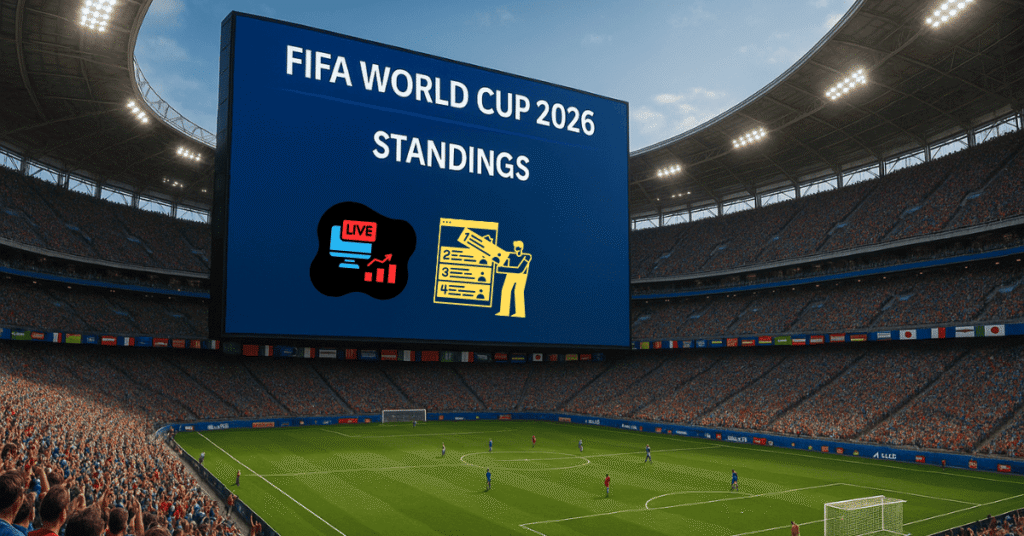
FIFA World Cup 2026 Standings: All 12 Groups
The FIFA World Cup 2026 standings update after every match. Group matches run from June 11 to June 27, 2026. Each table below refreshes live as games finish.
Each group has four teams. Each team plays three matches. A win is worth 3 points. A draw is worth 1 point. A loss is worth 0 points.
All 48 teams are confirmed. The top two in each group advance automatically. The eight best third-placed teams take the remaining knockout spots.
Try our FIFA World Cup 2026 Simulator & Bracket Predictor
Group A
Group B

Group C
Group D
Group E
Group F
Group G
Group H
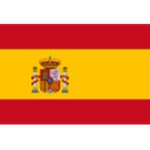
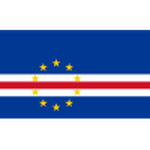
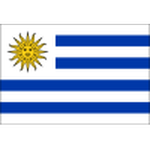
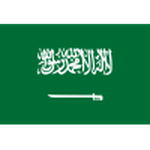
Group I
Group J
Group K
Group L
Group Stage
Tables show matches played (M), wins (W), draws (D), losses (L), goals for (GF), goals against (GA), goal difference (GD), and points (Pt). Live data updates as matches finish.
How the FIFA World Cup 2026 Points System Works
The points system is simple. Each result earns a fixed number of points.
- Win: 3 points
- Draw: 1 point
- Loss: 0 points
Each team plays three group-stage matches. The maximum a team can earn is 9 points. The minimum is 0 points.
Teams rank by total points first. The top two teams in every group qualify for the Round of 32 automatically. That covers 24 of the 32 knockout places. The other 8 spots go to the best third-placed teams across the 12 groups.
This format keeps more teams alive deeper into the group stage. Finishing third does not always end a team’s tournament in 2026.
What Points Total is Enough to Qualify?
Historical World Cup data shows clear patterns for how many points a team needs to advance.
| Points | Status | Qualification chance |
|---|---|---|
| 9 points (3 wins) | Group winner lock | 100% |
| 7 points (2W 1D) | Group winner or runner-up | 100% |
| 6 points (2 wins) | Strong runner-up position | Near 100% |
| 4 points (1W 1D) | The “safety zone” | Almost guaranteed advance, often as third place |
| 3 points (1 win) | The “bubble” | Goal difference becomes critical |
| 1 point (3 draws) | Edge case | Rare advance, only if other groups score very few goals |
| 0 points | Eliminated | No team has ever advanced with 0 points |
The 4-point mark is widely considered the safe target. Teams with exactly 4 points have rarely missed out as one of the eight best third-placed sides at any tournament with this format.
FIFA World Cup 2026 Tie-Breaker Rules
FIFA uses a layered system to break ties in the group standings. The order depends on whether two teams or three or more teams finish level on points.
Two Teams Tied on Points
When only two teams finish level, FIFA looks at overall stats first:
- Superior goal difference in all group matches
- Most goals scored in all group matches
- Highest team conduct score (fair play points)
- FIFA World Ranking
Goal difference is the first tiebreaker for two-team ties. This matches recent World Cup tournaments.
Three or More Teams Tied on Points
When three or more teams finish level, FIFA looks at head-to-head matches first:
- Most points from matches between the tied teams
- Superior goal difference in matches between the tied teams
- Most goals scored in matches between the tied teams
If one team separates after this step, the remaining teams stay tied and the criteria reapply only to them. If teams are still level, FIFA moves to overall stats: goal difference, goals scored, conduct score, then FIFA World Ranking.
This head-to-head-first approach differs from 2018 and 2022. At those tournaments, overall goal difference came first even when three or more teams were level.
The drawing of lots is no longer used at the World Cup. FIFA’s World Ranking now decides any final tie. This is a major change from past tournaments.
How Fair Play Points Work
The fair play score deducts points for cards. The team with the higher score (fewer deductions) ranks higher.
- Yellow card: minus 1 point
- Indirect red (two yellows): minus 3 points
- Direct red card: minus 4 points
- Yellow plus direct red: minus 5 points
Only one deduction applies per player per match. Fair play decided one World Cup spot before. At Russia 2018, Japan beat Senegal to a Round of 16 place on this rule. Both teams finished level on points, goal difference, goals scored, and head-to-head. Japan’s better fair play score sent them through.
How Third-Place Teams are Ranked
The 2026 format adds a new layer. Eight of the 12 third-placed teams advance to the Round of 32. FIFA ranks all 12 third-placed teams against each other to pick the best 8.
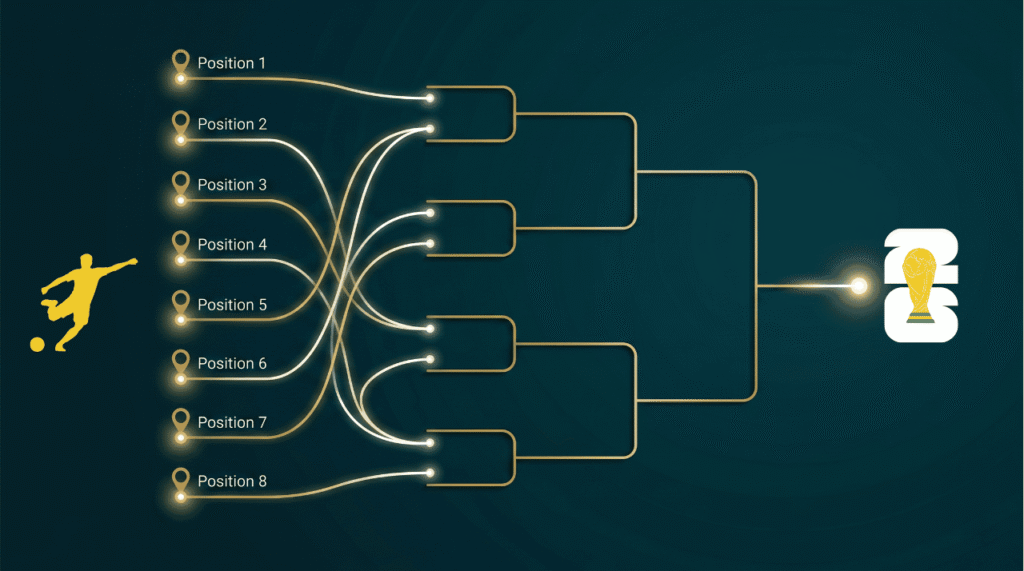
The criteria for ranking third-place teams use overall stats only. Head-to-head does not apply because these teams never played each other.
- Points
- Goal difference in all group matches
- Goals scored in all group matches
- Team conduct score (fair play points)
- Latest FIFA World Ranking
- Previous FIFA World Rankings (as a final fallback)
This means third-placed teams compete on overall stats. Total numbers across three games decide who advances. One extra goal can decide a tournament path. A team that loses 1-2 may still advance if a team in another group lost 0-3.
A 2-2 draw also ranks higher than a 0-0 draw under this system, even though both give the same points and goal difference. Goals scored can be the deciding factor, so attacking play is rewarded.
How Group Rankings Decide Knockout Qualification
FIFA World Cup 2026 splits 48 teams into 12 groups of 4. The path to the Round of 32 has three routes:
- 12 group winners qualify directly
- 12 group runners-up qualify directly
- 8 best third-placed teams qualify by ranking
Total: 32 teams advance. That is two of every three teams, or 66.7% of the 48-team field. The other 16 teams go home after the group stage.
The group stage runs from June 11 to June 27, 2026. The Round of 32 starts June 28. From that point, every match is single elimination.
The full knockout path runs Round of 32, Round of 16, Quarterfinals, Semifinals, and Final. The final is on July 19, 2026 at MetLife Stadium in East Rutherford, New Jersey.
A rule worth knowing: the 2026 bracket keeps teams from the same group apart in the Round of 32. Two teams that shared a group cannot meet again in the first knockout round.
What to Watch in the FIFA World Cup 2026 Standings
Three things move the standings most.
Early wins matter. Three points in game one ease the math. A loss in game one adds pressure. The picture tightens fast over three games.
Goal difference always counts. It is the first tiebreaker for two-team ties. It also ranks all third-placed teams. A bigger winning margin can decide a knockout spot.
Discipline counts too. Fair play points break ties when teams are level on points, goal difference, and goals scored. One late yellow card can shift a tournament path.
Watch matchday three closely. That is when most groups decide their order. Matchday three runs from June 24 to June 27. Final-round group matches kick off at the same time. Late goals in one stadium can change the table in another city.
When the FIFA World Cup 2026 Standings Become Final
The group stage ends on June 27, 2026. That is when all 12 group tables lock in. FIFA confirms the eight best third-placed teams the same day.
The Round of 32 bracket forms once those 32 teams are confirmed. Round of 32 matches start June 28, 2026 and run through July 3, 2026.
From the Round of 32 onward, standings stop driving qualification. Knockout matches decide everything. One loss ends a team’s run. The final on July 19, 2026 closes the tournament.
FAQ About FIFA World Cup 2026 Standings
How often do the FIFA World Cup 2026 standings update?
Group standings update after every match result. Live tables refresh in real time during matches. Final group rankings lock in on June 27, 2026 after the last group-stage matches.
How many teams qualify for the knockout stage?
32 teams advance to the Round of 32. The top two teams in each of the 12 groups qualify directly. The 8 best third-placed teams across all groups also qualify.
How many points do you need to qualify for the Round of 32?
4 points (one win and one draw) is the historical safety mark. Teams with 4 points almost always advance, often as one of the eight best third-placed teams. Teams with 3 points (one win) advance only if their goal difference beats other third-placed sides.
What is the first tie-breaker at the FIFA World Cup 2026?
For ties between two teams, the first tiebreaker is overall goal difference, followed by goals scored, fair play points, then FIFA World Ranking. For ties between three or more teams, FIFA applies head-to-head results first (points, then goal difference, then goals scored from matches between the tied teams).
How are the eight best third-placed teams chosen?
FIFA ranks all 12 third-placed teams using points first, then goal difference, then goals scored, then fair play points, then the latest FIFA World Ranking, and finally previous FIFA rankings as a fallback. The top 8 in this ranking advance to the Round of 32.
How many points does a team get for a win, draw, or loss?
A win is worth 3 points. A draw is worth 1 point. A loss is worth 0 points. The maximum group total is 9 points. Each team plays three group matches.
What happens if teams are tied on every tie-breaker?
FIFA uses the FIFA World Ranking to settle final ties at the 2026 World Cup. The drawing of lots is no longer used. The team with the higher FIFA ranking advances. Earlier rankings are used as a fallback if teams are still tied.
Where can I check FIFA World Cup 2026 live scores?
Official live scores are available on FIFA.com, FOX Sports, and ESPN. World Cup Pass also covers every match with real-time scores, lineups, and key stats. Updates show as the action happens.
